




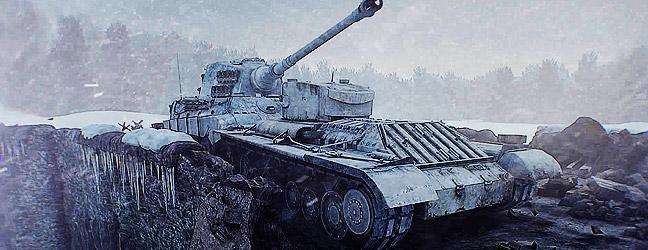

Japanese armored vehicles continued
Дата: 12.12.2013 20:12:15
pizzastorm: Japanese armored vehicles continued - Here we continue our look at
Japanese tanks in anticipation of the 8.10 update.  The scale of tank forces used in the Pacific Theatre was
much smaller than the fierce battles which took place across
Europe. The outcome of the war in the Pacific was heavily dependent
on naval battles that took place in regions like Guadalcanal,
Midway, and the Coral Sea. Even with less emphasis being placed on
armored vehicles in the Pacific, they still played an important and
interesting part in the war.
The scale of tank forces used in the Pacific Theatre was
much smaller than the fierce battles which took place across
Europe. The outcome of the war in the Pacific was heavily dependent
on naval battles that took place in regions like Guadalcanal,
Midway, and the Coral Sea. Even with less emphasis being placed on
armored vehicles in the Pacific, they still played an important and
interesting part in the war.  In 1937, the Japanese Empire
had started full-scale war against China. By that time, their
armored forces had approximately 400 tanks at their disposal. Even
though they consisted of mostly outdated models, they were used
quite successfully. The Chinese army suffered from a lack of
antitank equipment, leaving them with little to counter Japanese
tanks. Although outdated, the tanks were being used to break
through enemy defenses and as mobile gun fortifications.
In 1937, the Japanese Empire
had started full-scale war against China. By that time, their
armored forces had approximately 400 tanks at their disposal. Even
though they consisted of mostly outdated models, they were used
quite successfully. The Chinese army suffered from a lack of
antitank equipment, leaving them with little to counter Japanese
tanks. Although outdated, the tanks were being used to break
through enemy defenses and as mobile gun fortifications.
Military successes in Manchuria and China gave the Japanese army more confidence in their land troops. Taking from their successes against China, Japan then moved against the USSR. The Soviet Union however, protected its land from attack in a series of battles near Lake Hasan in 1938. The next year, the Japanese army started a new military conflict near the Khalkhyn Gol River in Mongolia, which was under USSR protection. This time, the Japanese brought numerous tanks to the fight. Initially they had 87 armored vehicles, including 35 ‘Type 95 ‘Ha-Go’’ light tanks. It was the first time this vehicle was used in such large numbers. Later, as the conflict escalated, more and more of them were drawn to the Mongolian battlefields. At the start of hostilities,
Japanese vehicles enjoyed some degree of success, but after their
first encounters with the Soviet BT-5 and BA-10 armored vehicles,
they suffered heavy losses. The 45mm guns which were mounted on
Soviet tanks were easily able to penetrate the armor of attacking
‘tots’ (the nickname that Japanese tanks were given by Soviet
soldiers). At the same time, Soviet tanks were also vulnerable to
shells fired from the Japanese 37mm anti-tank guns. Although the
Japanese tanks had less firepower than Soviet tanks, the majority
of both Japanese and Soviets armored vehicles only had anti-bullet
armoring, making them both vulnerable to turret and field guns.
Both sides suffered many losses due to tactical mistakes and a lack
of coordination with other troops. As result of this
conflict, Japan and the USSR received valuable battle experience,
including practice in using large tank divisions. Many historians
believe that the Khalkhyn Gol incident greatly influenced the
decision for Japan to avoid further engagements against the USSR.
Instead, they started their preparations for invasion in South-East
Asia. Many industrial resources were re-orientated towards fleet
production.
At the start of hostilities,
Japanese vehicles enjoyed some degree of success, but after their
first encounters with the Soviet BT-5 and BA-10 armored vehicles,
they suffered heavy losses. The 45mm guns which were mounted on
Soviet tanks were easily able to penetrate the armor of attacking
‘tots’ (the nickname that Japanese tanks were given by Soviet
soldiers). At the same time, Soviet tanks were also vulnerable to
shells fired from the Japanese 37mm anti-tank guns. Although the
Japanese tanks had less firepower than Soviet tanks, the majority
of both Japanese and Soviets armored vehicles only had anti-bullet
armoring, making them both vulnerable to turret and field guns.
Both sides suffered many losses due to tactical mistakes and a lack
of coordination with other troops. As result of this
conflict, Japan and the USSR received valuable battle experience,
including practice in using large tank divisions. Many historians
believe that the Khalkhyn Gol incident greatly influenced the
decision for Japan to avoid further engagements against the USSR.
Instead, they started their preparations for invasion in South-East
Asia. Many industrial resources were re-orientated towards fleet
production.  During the short period from
December 1941 to May 1942, the Japanese army had conquered
Hong-Kong, the Philippines, Holland, India, Burma, Thailand, and
several islands in the Pacific. They were only a few steps away
from invading India and Australia as well. In many of these
operations, tanks were actively and successfully utilized by the
Japanese Empire. For instance, during battles in the Philippines,
Japanese vehicles struggled against the newest American tank at the
time, the M3 ‘Stuart’. The ‘Chi-Ha’ with its short 57mm guns had
difficulty battling against the maneuverable ‘Stuart’s. This forced
Japan to introduce an improved version of the ‘Chi-Ha’, the
‘Shinhoto Chi-Ha’, which began to achieve great results in battle.
This was one the factors which assured success in their island
conquests. During the first half of the war, the Japanese
military managed to use tanks in a variety of conditions: in the
middle of jungles, on top of mountains, even near swift rivers.
This allowed the Japanese to surprise the enemy, which rarely had
means of defending against these vehicles.
During the short period from
December 1941 to May 1942, the Japanese army had conquered
Hong-Kong, the Philippines, Holland, India, Burma, Thailand, and
several islands in the Pacific. They were only a few steps away
from invading India and Australia as well. In many of these
operations, tanks were actively and successfully utilized by the
Japanese Empire. For instance, during battles in the Philippines,
Japanese vehicles struggled against the newest American tank at the
time, the M3 ‘Stuart’. The ‘Chi-Ha’ with its short 57mm guns had
difficulty battling against the maneuverable ‘Stuart’s. This forced
Japan to introduce an improved version of the ‘Chi-Ha’, the
‘Shinhoto Chi-Ha’, which began to achieve great results in battle.
This was one the factors which assured success in their island
conquests. During the first half of the war, the Japanese
military managed to use tanks in a variety of conditions: in the
middle of jungles, on top of mountains, even near swift rivers.
This allowed the Japanese to surprise the enemy, which rarely had
means of defending against these vehicles.  Starting from 1943, the
situation changed. Strategic initiative in the war passed to the US
hands, which liberated island by island and gradually drew towards
the heart of the Japanese empire. Americans had already dominated
both the sea and air. Their ground troops were also being supplied
with M4 Sherman and M5 Stuart tanks, as well as the new man
portable antitank recoil-less ‘Bazooka’ rocket launcher for their
infantry. Later, all of this equipment was also provided to the
Chinese forces, which continued fight with Japanese forces until
the end of the war.
Starting from 1943, the
situation changed. Strategic initiative in the war passed to the US
hands, which liberated island by island and gradually drew towards
the heart of the Japanese empire. Americans had already dominated
both the sea and air. Their ground troops were also being supplied
with M4 Sherman and M5 Stuart tanks, as well as the new man
portable antitank recoil-less ‘Bazooka’ rocket launcher for their
infantry. Later, all of this equipment was also provided to the
Chinese forces, which continued fight with Japanese forces until
the end of the war.
This made successful use of tanks almost impossible for Japanese forces, forcing them to resort to guerilla tactics: night marches, ambushes, raids and even suicide attacks. In 1945, two Japanese tanks (the ‘Chi-Ha’ and ‘Ha-Go’) were dispatched with explosives attached to the armor. They located a column of armored vehicles led by ‘Sherman’ tanks, which they rammed at full speed. Immediately after contact, the crew denoted the explosives, effectively hampering the momentum of the American offensive. Even desperate acts such as
this could not save Japan from losing the war. Kwantung Army’s
defeat in August 1945 was the last step in crushing Japanese land
forces. The Soviet strike against the Japanese was so unexpected
that the majority of Kwantung Army’s tanks were captured before
they had even taken part in the battle.
Even desperate acts such as
this could not save Japan from losing the war. Kwantung Army’s
defeat in August 1945 was the last step in crushing Japanese land
forces. The Soviet strike against the Japanese was so unexpected
that the majority of Kwantung Army’s tanks were captured before
they had even taken part in the battle.
After Japan surrendered, Chinese Civil war stared anew. USSR passed captured armored vehicles to Chinese communists, who lacked equipment and weaponry. Vehicles which were based on islands continued their service as training vehicles during the ensuing time of peace. We hope that you enjoyed this look at Japanese armored vehicles during the war. Please discuss below!
The scale of tank forces used in the Pacific Theatre was
much smaller than the fierce battles which took place across
Europe. The outcome of the war in the Pacific was heavily dependent
on naval battles that took place in regions like Guadalcanal,
Midway, and the Coral Sea. Even with less emphasis being placed on
armored vehicles in the Pacific, they still played an important and
interesting part in the war. In 1937, the Japanese Empire
had started full-scale war against China. By that time, their
armored forces had approximately 400 tanks at their disposal. Even
though they consisted of mostly outdated models, they were used
quite successfully. The Chinese army suffered from a lack of
antitank equipment, leaving them with little to counter Japanese
tanks. Although outdated, the tanks were being used to break
through enemy defenses and as mobile gun fortifications.Military successes in Manchuria and China gave the Japanese army more confidence in their land troops. Taking from their successes against China, Japan then moved against the USSR. The Soviet Union however, protected its land from attack in a series of battles near Lake Hasan in 1938. The next year, the Japanese army started a new military conflict near the Khalkhyn Gol River in Mongolia, which was under USSR protection. This time, the Japanese brought numerous tanks to the fight. Initially they had 87 armored vehicles, including 35 ‘Type 95 ‘Ha-Go’’ light tanks. It was the first time this vehicle was used in such large numbers. Later, as the conflict escalated, more and more of them were drawn to the Mongolian battlefields.
At the start of hostilities,
Japanese vehicles enjoyed some degree of success, but after their
first encounters with the Soviet BT-5 and BA-10 armored vehicles,
they suffered heavy losses. The 45mm guns which were mounted on
Soviet tanks were easily able to penetrate the armor of attacking
‘tots’ (the nickname that Japanese tanks were given by Soviet
soldiers). At the same time, Soviet tanks were also vulnerable to
shells fired from the Japanese 37mm anti-tank guns. Although the
Japanese tanks had less firepower than Soviet tanks, the majority
of both Japanese and Soviets armored vehicles only had anti-bullet
armoring, making them both vulnerable to turret and field guns.
Both sides suffered many losses due to tactical mistakes and a lack
of coordination with other troops. As result of this
conflict, Japan and the USSR received valuable battle experience,
including practice in using large tank divisions. Many historians
believe that the Khalkhyn Gol incident greatly influenced the
decision for Japan to avoid further engagements against the USSR.
Instead, they started their preparations for invasion in South-East
Asia. Many industrial resources were re-orientated towards fleet
production. During the short period from
December 1941 to May 1942, the Japanese army had conquered
Hong-Kong, the Philippines, Holland, India, Burma, Thailand, and
several islands in the Pacific. They were only a few steps away
from invading India and Australia as well. In many of these
operations, tanks were actively and successfully utilized by the
Japanese Empire. For instance, during battles in the Philippines,
Japanese vehicles struggled against the newest American tank at the
time, the M3 ‘Stuart’. The ‘Chi-Ha’ with its short 57mm guns had
difficulty battling against the maneuverable ‘Stuart’s. This forced
Japan to introduce an improved version of the ‘Chi-Ha’, the
‘Shinhoto Chi-Ha’, which began to achieve great results in battle.
This was one the factors which assured success in their island
conquests. During the first half of the war, the Japanese
military managed to use tanks in a variety of conditions: in the
middle of jungles, on top of mountains, even near swift rivers.
This allowed the Japanese to surprise the enemy, which rarely had
means of defending against these vehicles. Starting from 1943, the
situation changed. Strategic initiative in the war passed to the US
hands, which liberated island by island and gradually drew towards
the heart of the Japanese empire. Americans had already dominated
both the sea and air. Their ground troops were also being supplied
with M4 Sherman and M5 Stuart tanks, as well as the new man
portable antitank recoil-less ‘Bazooka’ rocket launcher for their
infantry. Later, all of this equipment was also provided to the
Chinese forces, which continued fight with Japanese forces until
the end of the war. This made successful use of tanks almost impossible for Japanese forces, forcing them to resort to guerilla tactics: night marches, ambushes, raids and even suicide attacks. In 1945, two Japanese tanks (the ‘Chi-Ha’ and ‘Ha-Go’) were dispatched with explosives attached to the armor. They located a column of armored vehicles led by ‘Sherman’ tanks, which they rammed at full speed. Immediately after contact, the crew denoted the explosives, effectively hampering the momentum of the American offensive.
Even desperate acts such as
this could not save Japan from losing the war. Kwantung Army’s
defeat in August 1945 was the last step in crushing Japanese land
forces. The Soviet strike against the Japanese was so unexpected
that the majority of Kwantung Army’s tanks were captured before
they had even taken part in the battle.After Japan surrendered, Chinese Civil war stared anew. USSR passed captured armored vehicles to Chinese communists, who lacked equipment and weaponry. Vehicles which were based on islands continued their service as training vehicles during the ensuing time of peace. We hope that you enjoyed this look at Japanese armored vehicles during the war. Please discuss below!
Japanese armored vehicles continued