





The Chieftain's Hatch: Turan III Prototype
Дата: 19.04.2016 22:06:33
The_Chieftain:  I'm not sure quite why we're selling two
Premium tanks at the same time with armored housings for their
machine guns. It was said the Hungarians missed an opportunity to
make their armored machine gun housings a little more...
distinctive. Still, since we seem to be on a bit of an "obscure
tank" kick, let's have a look at the Turán III Prototipus, how it
came about, and how it died.The Turán started with an
acknowledgement that the Toldi light tanks (which were basically
Swedish Landsverk L-60s) weren't really suited for a general tank
role on the modern battlefield. After a bit of hunting, the
Hungarians ended up talking with Škoda.In 1938, Škoda took a crack
at what was effectively a "heavy light tank," the S-II-c. The
family resemblance to the older S-II-a (later the LT Vz 35) should
be obvious, though with 3cm of armor and the 47mm Vz 38 gun, the
vehicle now came in at some 16.5 tons. A bit of tweaking later, and
the 16.7-ton T21 was born. These ended up being developed for
series production as the T2, with an order of 200 being placed for
Romania before Germany put a hold on that sale.
I'm not sure quite why we're selling two
Premium tanks at the same time with armored housings for their
machine guns. It was said the Hungarians missed an opportunity to
make their armored machine gun housings a little more...
distinctive. Still, since we seem to be on a bit of an "obscure
tank" kick, let's have a look at the Turán III Prototipus, how it
came about, and how it died.The Turán started with an
acknowledgement that the Toldi light tanks (which were basically
Swedish Landsverk L-60s) weren't really suited for a general tank
role on the modern battlefield. After a bit of hunting, the
Hungarians ended up talking with Škoda.In 1938, Škoda took a crack
at what was effectively a "heavy light tank," the S-II-c. The
family resemblance to the older S-II-a (later the LT Vz 35) should
be obvious, though with 3cm of armor and the 47mm Vz 38 gun, the
vehicle now came in at some 16.5 tons. A bit of tweaking later, and
the 16.7-ton T21 was born. These ended up being developed for
series production as the T2, with an order of 200 being placed for
Romania before Germany put a hold on that sale.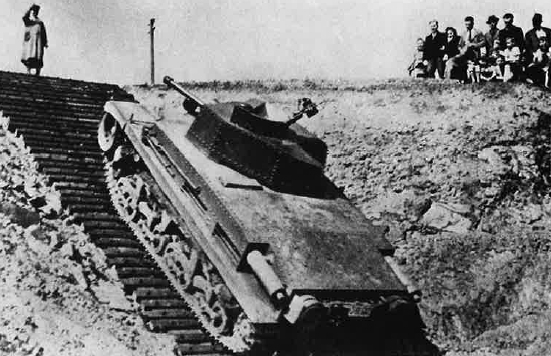 In turn, two T2s found their way to Hungary, where
they were tweaked a bit more. The armor was uprated from 30mm to
50mm, the weight went up from 17 to 18 tons, and the gun was
downgraded to a 4cm Škoda A-17 cannon. The gun was done for
logistical reasons as any, as the 4cm used ammunition common to the
Bofors anti-aircraft gun and could be found on the Toldi IIa and
the Nimrod. Thus, the 40M Turán, and 285 were built between 1941
and 1944.In order to give a more general purpose capability to the
Hungarian armored units, a fire support tank variant was developed:
the 41M Turán II, with a 7.5cm gun. It was generally intended to be
used with the Turán I, similar to how the Panzer IV was intended to
support the Panzer III. 139 Turán IIs were built over the course of
a year. One of these can be found in Kubinka, together with two
Toldis and a Nimrod, if you wish to travel to do so!Of course, as
time progressed, all countries concluded that the
low-velocity/high-caliber-high-velocity/low-caliber mix was not
sustainable, and Hungary was not immune to this change in thinking.
Preparations were made for the Turán III, with a long-barreled
7.5cm cannon derived from the German PaK-40. There seems to be some
confusion over the length, with 43 and 55 calibers both stated, but
I'm fairly confident it's a 43, as found on the mid-production
Panzer IVs.The big question would be "how do we get this bigger gun
into the turret of what was, basically, a light tank design?" The
solution, oddly enough, was a bigger turret. Particularly
noticeable is the increased height of the commander's cupola,
presumably to allow space for the larger cannon to recoil between
his legs (a disconcerting situation I discussed before with the
mere 5cm on the Panzer III). The initial design was apparently for
the TC to stand, under protection, but the larger recoil had to go
somewhere.
In turn, two T2s found their way to Hungary, where
they were tweaked a bit more. The armor was uprated from 30mm to
50mm, the weight went up from 17 to 18 tons, and the gun was
downgraded to a 4cm Škoda A-17 cannon. The gun was done for
logistical reasons as any, as the 4cm used ammunition common to the
Bofors anti-aircraft gun and could be found on the Toldi IIa and
the Nimrod. Thus, the 40M Turán, and 285 were built between 1941
and 1944.In order to give a more general purpose capability to the
Hungarian armored units, a fire support tank variant was developed:
the 41M Turán II, with a 7.5cm gun. It was generally intended to be
used with the Turán I, similar to how the Panzer IV was intended to
support the Panzer III. 139 Turán IIs were built over the course of
a year. One of these can be found in Kubinka, together with two
Toldis and a Nimrod, if you wish to travel to do so!Of course, as
time progressed, all countries concluded that the
low-velocity/high-caliber-high-velocity/low-caliber mix was not
sustainable, and Hungary was not immune to this change in thinking.
Preparations were made for the Turán III, with a long-barreled
7.5cm cannon derived from the German PaK-40. There seems to be some
confusion over the length, with 43 and 55 calibers both stated, but
I'm fairly confident it's a 43, as found on the mid-production
Panzer IVs.The big question would be "how do we get this bigger gun
into the turret of what was, basically, a light tank design?" The
solution, oddly enough, was a bigger turret. Particularly
noticeable is the increased height of the commander's cupola,
presumably to allow space for the larger cannon to recoil between
his legs (a disconcerting situation I discussed before with the
mere 5cm on the Panzer III). The initial design was apparently for
the TC to stand, under protection, but the larger recoil had to go
somewhere.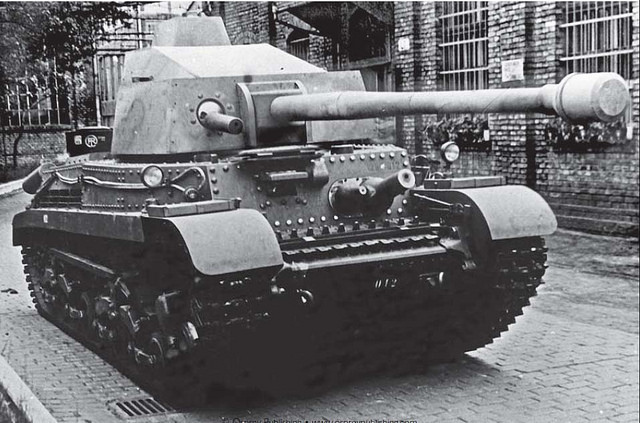 This brings us to the Turán III Prototipus,
the Premium tank currently available in World of Tanks. I'll let
you in on a secret: the vehicle is a fudge; not a real
tank.Notice how unusually smooth the turret is; how the lines are
not marred by anywhere near as many rivets as the hull, and the
total lack of observation slits for the cupola? Obviously not a
useful serviceable vehicle.
This brings us to the Turán III Prototipus,
the Premium tank currently available in World of Tanks. I'll let
you in on a secret: the vehicle is a fudge; not a real
tank.Notice how unusually smooth the turret is; how the lines are
not marred by anywhere near as many rivets as the hull, and the
total lack of observation slits for the cupola? Obviously not a
useful serviceable vehicle.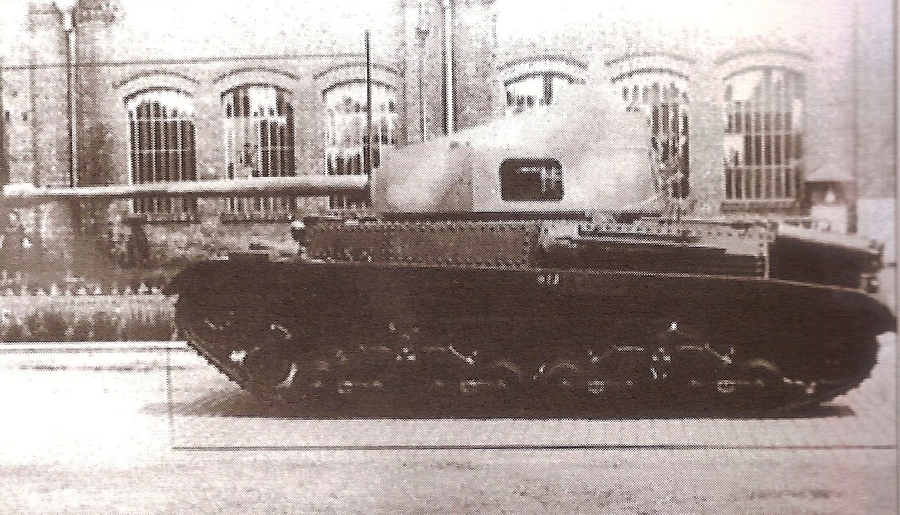 It's actually just a wooden mock-up
designed to test the configuration. The gun is wood as well. Yep,
that's not a muzzle cap, it's just solid wood.So what would an
actual Turán III look like? Well, like this:
It's actually just a wooden mock-up
designed to test the configuration. The gun is wood as well. Yep,
that's not a muzzle cap, it's just solid wood.So what would an
actual Turán III look like? Well, like this: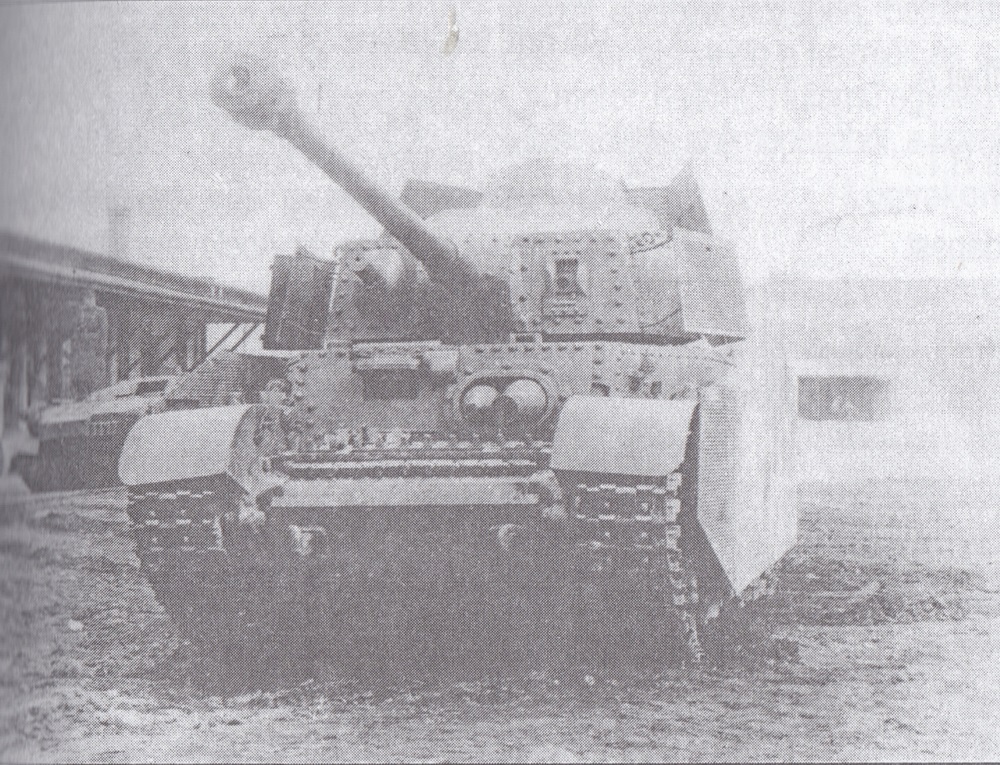 Note the turret machine gun has been turned
into a true coaxial instead of the disconnectable ball mount common
to earlier Czech designs. Of course, being made of real metal, the
turret is now heavily riveted, the bustle overhang is chamfered a
bit. The thicker hull seems to be only be readily identifiable by
the stronger framing around the hull MG mount. In common with the
other Turán type vehicles, a form of skirting has been added,
perforated to save weight. Remember, this is a design that had
roots in an 11-ton vehicle, and the Turán III is pushed 21. It can
be argued that Turán III is really the Vickers six-tonner taken to
its ultimate form.Only the one Turán III was made, and what
happened to it is lost to history. Given it's not in Kubinka as a
prize, it's logical the vehicle was destroyed. It certainly
wouldn't have been the best vehicle on the battlefield, but it
doesn't give the impression of having been a terrible design either
-- the basic components, from the engine through the gun were all
proven, if a little stressed.
Note the turret machine gun has been turned
into a true coaxial instead of the disconnectable ball mount common
to earlier Czech designs. Of course, being made of real metal, the
turret is now heavily riveted, the bustle overhang is chamfered a
bit. The thicker hull seems to be only be readily identifiable by
the stronger framing around the hull MG mount. In common with the
other Turán type vehicles, a form of skirting has been added,
perforated to save weight. Remember, this is a design that had
roots in an 11-ton vehicle, and the Turán III is pushed 21. It can
be argued that Turán III is really the Vickers six-tonner taken to
its ultimate form.Only the one Turán III was made, and what
happened to it is lost to history. Given it's not in Kubinka as a
prize, it's logical the vehicle was destroyed. It certainly
wouldn't have been the best vehicle on the battlefield, but it
doesn't give the impression of having been a terrible design either
-- the basic components, from the engine through the gun were all
proven, if a little stressed.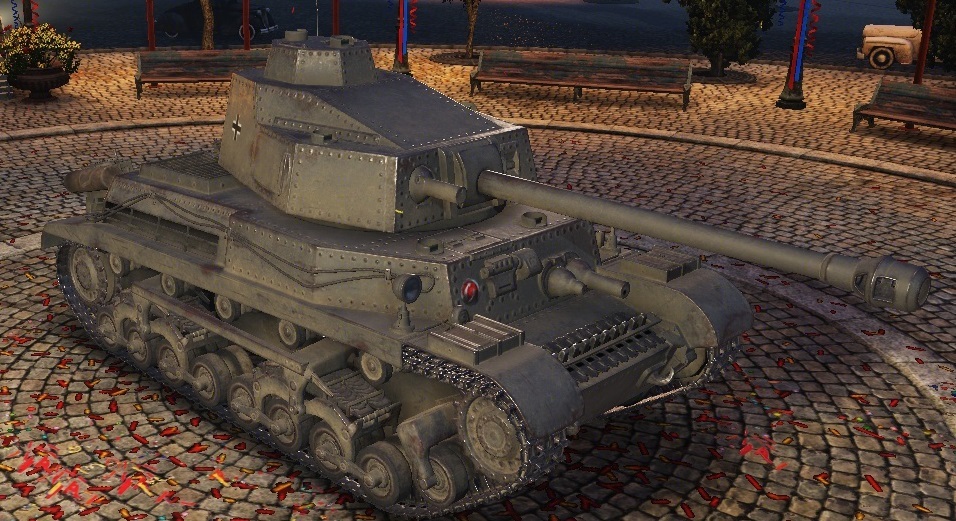 But there's
little point in speculation. We've given the Turán III Prototipus
the benefit of the doubt. It has a gun that shoots, and you can
play it in the game to draw your own conclusions!
But there's
little point in speculation. We've given the Turán III Prototipus
the benefit of the doubt. It has a gun that shoots, and you can
play it in the game to draw your own conclusions!
I'm not sure quite why we're selling two
Premium tanks at the same time with armored housings for their
machine guns. It was said the Hungarians missed an opportunity to
make their armored machine gun housings a little more...
distinctive. Still, since we seem to be on a bit of an "obscure
tank" kick, let's have a look at the Turán III Prototipus, how it
came about, and how it died.The Turán started with an
acknowledgement that the Toldi light tanks (which were basically
Swedish Landsverk L-60s) weren't really suited for a general tank
role on the modern battlefield. After a bit of hunting, the
Hungarians ended up talking with Škoda.In 1938, Škoda took a crack
at what was effectively a "heavy light tank," the S-II-c. The
family resemblance to the older S-II-a (later the LT Vz 35) should
be obvious, though with 3cm of armor and the 47mm Vz 38 gun, the
vehicle now came in at some 16.5 tons. A bit of tweaking later, and
the 16.7-ton T21 was born. These ended up being developed for
series production as the T2, with an order of 200 being placed for
Romania before Germany put a hold on that sale.In turn, two T2s found their way to Hungary, where
they were tweaked a bit more. The armor was uprated from 30mm to
50mm, the weight went up from 17 to 18 tons, and the gun was
downgraded to a 4cm Škoda A-17 cannon. The gun was done for
logistical reasons as any, as the 4cm used ammunition common to the
Bofors anti-aircraft gun and could be found on the Toldi IIa and
the Nimrod. Thus, the 40M Turán, and 285 were built between 1941
and 1944.In order to give a more general purpose capability to the
Hungarian armored units, a fire support tank variant was developed:
the 41M Turán II, with a 7.5cm gun. It was generally intended to be
used with the Turán I, similar to how the Panzer IV was intended to
support the Panzer III. 139 Turán IIs were built over the course of
a year. One of these can be found in Kubinka, together with two
Toldis and a Nimrod, if you wish to travel to do so!Of course, as
time progressed, all countries concluded that the
low-velocity/high-caliber-high-velocity/low-caliber mix was not
sustainable, and Hungary was not immune to this change in thinking.
Preparations were made for the Turán III, with a long-barreled
7.5cm cannon derived from the German PaK-40. There seems to be some
confusion over the length, with 43 and 55 calibers both stated, but
I'm fairly confident it's a 43, as found on the mid-production
Panzer IVs.The big question would be "how do we get this bigger gun
into the turret of what was, basically, a light tank design?" The
solution, oddly enough, was a bigger turret. Particularly
noticeable is the increased height of the commander's cupola,
presumably to allow space for the larger cannon to recoil between
his legs (a disconcerting situation I discussed before with the
mere 5cm on the Panzer III). The initial design was apparently for
the TC to stand, under protection, but the larger recoil had to go
somewhere.This brings us to the Turán III Prototipus,
the Premium tank currently available in World of Tanks. I'll let
you in on a secret: the vehicle is a fudge; not a real
tank.Notice how unusually smooth the turret is; how the lines are
not marred by anywhere near as many rivets as the hull, and the
total lack of observation slits for the cupola? Obviously not a
useful serviceable vehicle.It's actually just a wooden mock-up
designed to test the configuration. The gun is wood as well. Yep,
that's not a muzzle cap, it's just solid wood.So what would an
actual Turán III look like? Well, like this:Note the turret machine gun has been turned
into a true coaxial instead of the disconnectable ball mount common
to earlier Czech designs. Of course, being made of real metal, the
turret is now heavily riveted, the bustle overhang is chamfered a
bit. The thicker hull seems to be only be readily identifiable by
the stronger framing around the hull MG mount. In common with the
other Turán type vehicles, a form of skirting has been added,
perforated to save weight. Remember, this is a design that had
roots in an 11-ton vehicle, and the Turán III is pushed 21. It can
be argued that Turán III is really the Vickers six-tonner taken to
its ultimate form.Only the one Turán III was made, and what
happened to it is lost to history. Given it's not in Kubinka as a
prize, it's logical the vehicle was destroyed. It certainly
wouldn't have been the best vehicle on the battlefield, but it
doesn't give the impression of having been a terrible design either
-- the basic components, from the engine through the gun were all
proven, if a little stressed.But there's
little point in speculation. We've given the Turán III Prototipus
the benefit of the doubt. It has a gun that shoots, and you can
play it in the game to draw your own conclusions!The Chieftain's Hatch: Turan III Prototype