





Ronsons
Дата: 02.05.2014 21:32:36
The_Chieftain:  Reports of
M4 Mediums immolating themselves and their crews began to filter
back to the US shortly after the tank’s introduction into service.
Certainly the tank developed something of a reputation for being a
tad easy to brew up, both with the using nation and their
opposition, names such as Ronson and Tommycooker being thrown
around. As an aside, it seems that a player on the forum did a
little digging, and could not find any example of Ronson using the
slogan “Lights first time, every time” any time during or before
WWII. There’s a challenge for you guys, to see if you can validate
the legend.
Reports of
M4 Mediums immolating themselves and their crews began to filter
back to the US shortly after the tank’s introduction into service.
Certainly the tank developed something of a reputation for being a
tad easy to brew up, both with the using nation and their
opposition, names such as Ronson and Tommycooker being thrown
around. As an aside, it seems that a player on the forum did a
little digging, and could not find any example of Ronson using the
slogan “Lights first time, every time” any time during or before
WWII. There’s a challenge for you guys, to see if you can validate
the legend. 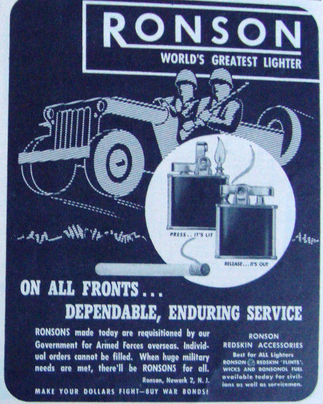 A conference was held at the Tank-Automotive Center in
Detroit on 7th January 1943. Armored Force and Ordnance both,
obviously enough, were represented. A letter by Colonel
Borden of Ordnance Department dated 12 January related the results.
“It was agreed that it would be most desirable to further
investigate the incendiary effect of firing against the Medium Tank
M4 to establish, if possible, whether the initiation of fire in the
tank is started from the ignition of gas, gas fumes, or oil, or
whether the initiation of fire is started from the ignition of
ammunition in the tanks. It is, therefore, requested that the
Commanding General, Armored Force, be authorised to expend two
Medium Tanks M4 and the necessary quantities of ammunition to
establish this. It is expected that one tank should be equipped
with full complement of ammunition, and should be cleaned
completely to eliminate all gas, oil and fumes therefrom. Firings
should then be conducted to establish the relative facility with
which fires are started as a result of ammunition being penetrated
by hot shell fragments. The second tank should be prepared with all
ammunition removed, but otherwise in operating condition with gas
and oil. It should then be operated to permit a normal condition to
develop of seepage of oil and gas, and an accumulation of fumes in
the tank following which it should be fired upon to establish the
relative ease with which fires are started by ignition of gas or
oil from the explosion of shells or the penetration of the tank by
projectiles or fragments thereof”
A conference was held at the Tank-Automotive Center in
Detroit on 7th January 1943. Armored Force and Ordnance both,
obviously enough, were represented. A letter by Colonel
Borden of Ordnance Department dated 12 January related the results.
“It was agreed that it would be most desirable to further
investigate the incendiary effect of firing against the Medium Tank
M4 to establish, if possible, whether the initiation of fire in the
tank is started from the ignition of gas, gas fumes, or oil, or
whether the initiation of fire is started from the ignition of
ammunition in the tanks. It is, therefore, requested that the
Commanding General, Armored Force, be authorised to expend two
Medium Tanks M4 and the necessary quantities of ammunition to
establish this. It is expected that one tank should be equipped
with full complement of ammunition, and should be cleaned
completely to eliminate all gas, oil and fumes therefrom. Firings
should then be conducted to establish the relative facility with
which fires are started as a result of ammunition being penetrated
by hot shell fragments. The second tank should be prepared with all
ammunition removed, but otherwise in operating condition with gas
and oil. It should then be operated to permit a normal condition to
develop of seepage of oil and gas, and an accumulation of fumes in
the tank following which it should be fired upon to establish the
relative ease with which fires are started by ignition of gas or
oil from the explosion of shells or the penetration of the tank by
projectiles or fragments thereof” 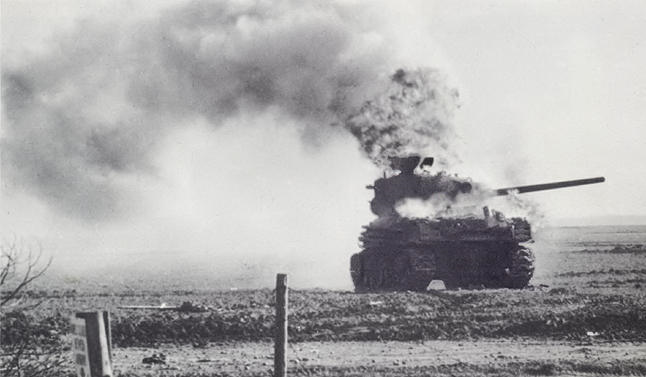 The last paragraph may require some explanation for
the uninitiated. I have never seen an operating tank which did not
have pooled fluids in the subturret floor. Usually hydraulic fluid,
but it could be anything. The tank’s not supposed to leak, of
course, but it does. That’s part of the reason they invented drain
plugs! Aberdeen received its marching orders in a letter dated
26th January. “It is requested that such investigations be
pursued expeditiously and with the greatest freedom on the part of
the Proving Ground to enable required information to be obtained”.
It may be worth noting that in all the various letters and
documents, I cannot recall ever reading a line such as that
elsewhere. This was obviously considered to be a matter of some
importance. These would not be the first tests to be carried out on
the subject by Aberdeen. They had tried, to a lesser extent,
similar experiments with the M3A1 medium. It concluded that any
ammunition can be ignited: from .30cal belt and .45ACP drums
through 37mm and 75mm. The latter two being considered ‘serious’.
It was also concluded that oily waste can be ignited directly by
hot fragments from the AT grenade (being used for the test) and, in
some cases, even without contact by the fragments. Unfortunately,
the results of Aberdeen’s test on the M4 were not in the file. But
there was, however, a report from Ordnance of their observations of
Armored Force testing on the same subject in Fort Knox, which they
stated generally matched with Aberdeen’s results. They beat up the
M4s. First of all, the ‘stowed’ tank took three rounds of 37mm M51.
The first round had fragments penetrate cartridge cases, and two
rounds burned to an indicated temperature of 700F. Once the fire
was put out, they restowed, and tried again. The second round
caused no fire, the third didn’t sufficiently penetrate. Then they
fired a 75mm M61APC shot at the center of the turret. “Several
rounds burned” Next came a 75mm M48 Delay-fuze HE. An impact on the
turret and two on the sponson were ineffective. Shooting to rounds
at the area between track and sponson, however, broke the track,
and split a weld between the floor and hull side plate. The
ammunition stowed adjacent to the points of impact did not
function. A 105mm M1 round similarly struck the sponson to do no
damage. Next came three rounds of 75mm M61 Shell, with HE. The
first round penetrated just next to the HE rounds, detonated about
4’ inside the tank, and failed to start a fire. The second round
also penetrated, to no fire. The third one, however, started a fire
indicated at 1,200F. Still, the HE rounds inside did not see their
warheads detonate. That was pretty much the end of that tank. Then
they shot at one with the engine running. First to impact, three
rounds 37mm M51. All complete penetrations, no fire. Then two
rounds 75mm M61. The first penetrated the turret, the second the
sponson. This latter started a fire. Finally, a 75mm M48 on Delay.
It functioned on the sponson next to the gas tank, sprung a leak at
the drain hole, and was estimated that a subsequent round would
have started a fire. The report stated: “This concluded the
actual test in connection with fires, it being agreed by all
present that fires within the turret are started by hot fragments
penetrating the cartridge cases” It also stated "Fires [of this
type] will generate flash temperatures above 700 degrees and occur
so quickly that no escape or preventative action is possible" Fires
in the engine compartment “May be caused by ignition of gasoline
leaking from sprung or penetrated tanks”, but that was less
important to the purposes of the tests, they were more worried
about crew survival. They did not try shooting directly at the
engine compartment.
The last paragraph may require some explanation for
the uninitiated. I have never seen an operating tank which did not
have pooled fluids in the subturret floor. Usually hydraulic fluid,
but it could be anything. The tank’s not supposed to leak, of
course, but it does. That’s part of the reason they invented drain
plugs! Aberdeen received its marching orders in a letter dated
26th January. “It is requested that such investigations be
pursued expeditiously and with the greatest freedom on the part of
the Proving Ground to enable required information to be obtained”.
It may be worth noting that in all the various letters and
documents, I cannot recall ever reading a line such as that
elsewhere. This was obviously considered to be a matter of some
importance. These would not be the first tests to be carried out on
the subject by Aberdeen. They had tried, to a lesser extent,
similar experiments with the M3A1 medium. It concluded that any
ammunition can be ignited: from .30cal belt and .45ACP drums
through 37mm and 75mm. The latter two being considered ‘serious’.
It was also concluded that oily waste can be ignited directly by
hot fragments from the AT grenade (being used for the test) and, in
some cases, even without contact by the fragments. Unfortunately,
the results of Aberdeen’s test on the M4 were not in the file. But
there was, however, a report from Ordnance of their observations of
Armored Force testing on the same subject in Fort Knox, which they
stated generally matched with Aberdeen’s results. They beat up the
M4s. First of all, the ‘stowed’ tank took three rounds of 37mm M51.
The first round had fragments penetrate cartridge cases, and two
rounds burned to an indicated temperature of 700F. Once the fire
was put out, they restowed, and tried again. The second round
caused no fire, the third didn’t sufficiently penetrate. Then they
fired a 75mm M61APC shot at the center of the turret. “Several
rounds burned” Next came a 75mm M48 Delay-fuze HE. An impact on the
turret and two on the sponson were ineffective. Shooting to rounds
at the area between track and sponson, however, broke the track,
and split a weld between the floor and hull side plate. The
ammunition stowed adjacent to the points of impact did not
function. A 105mm M1 round similarly struck the sponson to do no
damage. Next came three rounds of 75mm M61 Shell, with HE. The
first round penetrated just next to the HE rounds, detonated about
4’ inside the tank, and failed to start a fire. The second round
also penetrated, to no fire. The third one, however, started a fire
indicated at 1,200F. Still, the HE rounds inside did not see their
warheads detonate. That was pretty much the end of that tank. Then
they shot at one with the engine running. First to impact, three
rounds 37mm M51. All complete penetrations, no fire. Then two
rounds 75mm M61. The first penetrated the turret, the second the
sponson. This latter started a fire. Finally, a 75mm M48 on Delay.
It functioned on the sponson next to the gas tank, sprung a leak at
the drain hole, and was estimated that a subsequent round would
have started a fire. The report stated: “This concluded the
actual test in connection with fires, it being agreed by all
present that fires within the turret are started by hot fragments
penetrating the cartridge cases” It also stated "Fires [of this
type] will generate flash temperatures above 700 degrees and occur
so quickly that no escape or preventative action is possible" Fires
in the engine compartment “May be caused by ignition of gasoline
leaking from sprung or penetrated tanks”, but that was less
important to the purposes of the tests, they were more worried
about crew survival. They did not try shooting directly at the
engine compartment. 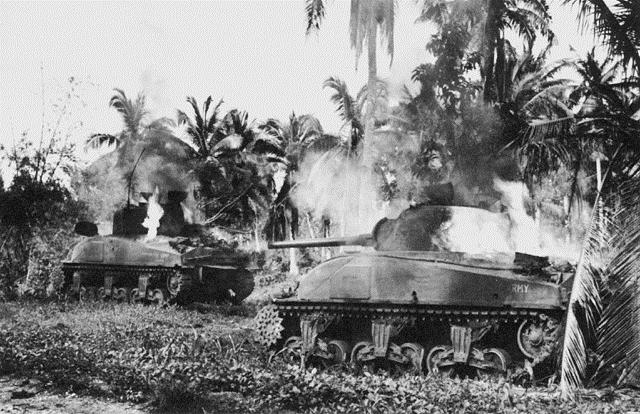 Reconfiguration of ammunition stowage to horizontal
(“Similar to that in the Russian tanks”) and a sleeve to cover
the cartridge was recommended. Vertical stowage was considered to
increase the possibility of fires. Well, it turned out that they
would use a different form of protection instead of the sleeve, the
selection of which was the subject of a different set of tests. In
the meantime, since they had already written off the two hulls,
they decided that they may as well put them to use by further
testing of ammunition. Six rounds of M67 HEAT 105mm fired at
the front of the first tank gave three complete penetrations, two
partial penetrations, and one low-order detonation. One of the
partial penetrations cracked the front slope between the two
drrivers' positions for about two feet. The other patrial
penetration was at the very top of the turret, so wasn't considered
a viable sample. However, the report stated "3 CPs out of 5 is
considered unsatisfactory", and "that Proving Ground Tests of the
M67 be studied to determine whether current production ammunition
of this type is satisfactory" A 75mm M61 APC shot penetrated
adjectent to an M67 impact, it was concluded that the weakened
plate caused by M67 allowed the penetration. A 105mm HE (M1) round
firted against the turret, no visible effect. (If the tank was
stowed with optics etc is not specificed) Given that the M61 Shot
and M61 Shell seemed to give comparable results, they also
recommended investigation as to the relative merits of the HE
filler. For those of you who don't know, I've
a Facebook
page here , and once in a blue moon, I stream
at http://www.twitch.tv/the_chieftain, though maybe more
this month due to the hunt-the-staff event going on.
Reconfiguration of ammunition stowage to horizontal
(“Similar to that in the Russian tanks”) and a sleeve to cover
the cartridge was recommended. Vertical stowage was considered to
increase the possibility of fires. Well, it turned out that they
would use a different form of protection instead of the sleeve, the
selection of which was the subject of a different set of tests. In
the meantime, since they had already written off the two hulls,
they decided that they may as well put them to use by further
testing of ammunition. Six rounds of M67 HEAT 105mm fired at
the front of the first tank gave three complete penetrations, two
partial penetrations, and one low-order detonation. One of the
partial penetrations cracked the front slope between the two
drrivers' positions for about two feet. The other patrial
penetration was at the very top of the turret, so wasn't considered
a viable sample. However, the report stated "3 CPs out of 5 is
considered unsatisfactory", and "that Proving Ground Tests of the
M67 be studied to determine whether current production ammunition
of this type is satisfactory" A 75mm M61 APC shot penetrated
adjectent to an M67 impact, it was concluded that the weakened
plate caused by M67 allowed the penetration. A 105mm HE (M1) round
firted against the turret, no visible effect. (If the tank was
stowed with optics etc is not specificed) Given that the M61 Shot
and M61 Shell seemed to give comparable results, they also
recommended investigation as to the relative merits of the HE
filler. For those of you who don't know, I've
a Facebook
page here , and once in a blue moon, I stream
at http://www.twitch.tv/the_chieftain, though maybe more
this month due to the hunt-the-staff event going on.
Reports of
M4 Mediums immolating themselves and their crews began to filter
back to the US shortly after the tank’s introduction into service.
Certainly the tank developed something of a reputation for being a
tad easy to brew up, both with the using nation and their
opposition, names such as Ronson and Tommycooker being thrown
around. As an aside, it seems that a player on the forum did a
little digging, and could not find any example of Ronson using the
slogan “Lights first time, every time” any time during or before
WWII. There’s a challenge for you guys, to see if you can validate
the legend. A conference was held at the Tank-Automotive Center in
Detroit on 7th January 1943. Armored Force and Ordnance both,
obviously enough, were represented. A letter by Colonel
Borden of Ordnance Department dated 12 January related the results.
“It was agreed that it would be most desirable to further
investigate the incendiary effect of firing against the Medium Tank
M4 to establish, if possible, whether the initiation of fire in the
tank is started from the ignition of gas, gas fumes, or oil, or
whether the initiation of fire is started from the ignition of
ammunition in the tanks. It is, therefore, requested that the
Commanding General, Armored Force, be authorised to expend two
Medium Tanks M4 and the necessary quantities of ammunition to
establish this. It is expected that one tank should be equipped
with full complement of ammunition, and should be cleaned
completely to eliminate all gas, oil and fumes therefrom. Firings
should then be conducted to establish the relative facility with
which fires are started as a result of ammunition being penetrated
by hot shell fragments. The second tank should be prepared with all
ammunition removed, but otherwise in operating condition with gas
and oil. It should then be operated to permit a normal condition to
develop of seepage of oil and gas, and an accumulation of fumes in
the tank following which it should be fired upon to establish the
relative ease with which fires are started by ignition of gas or
oil from the explosion of shells or the penetration of the tank by
projectiles or fragments thereof” The last paragraph may require some explanation for
the uninitiated. I have never seen an operating tank which did not
have pooled fluids in the subturret floor. Usually hydraulic fluid,
but it could be anything. The tank’s not supposed to leak, of
course, but it does. That’s part of the reason they invented drain
plugs! Aberdeen received its marching orders in a letter dated
26th January. “It is requested that such investigations be
pursued expeditiously and with the greatest freedom on the part of
the Proving Ground to enable required information to be obtained”.
It may be worth noting that in all the various letters and
documents, I cannot recall ever reading a line such as that
elsewhere. This was obviously considered to be a matter of some
importance. These would not be the first tests to be carried out on
the subject by Aberdeen. They had tried, to a lesser extent,
similar experiments with the M3A1 medium. It concluded that any
ammunition can be ignited: from .30cal belt and .45ACP drums
through 37mm and 75mm. The latter two being considered ‘serious’.
It was also concluded that oily waste can be ignited directly by
hot fragments from the AT grenade (being used for the test) and, in
some cases, even without contact by the fragments. Unfortunately,
the results of Aberdeen’s test on the M4 were not in the file. But
there was, however, a report from Ordnance of their observations of
Armored Force testing on the same subject in Fort Knox, which they
stated generally matched with Aberdeen’s results. They beat up the
M4s. First of all, the ‘stowed’ tank took three rounds of 37mm M51.
The first round had fragments penetrate cartridge cases, and two
rounds burned to an indicated temperature of 700F. Once the fire
was put out, they restowed, and tried again. The second round
caused no fire, the third didn’t sufficiently penetrate. Then they
fired a 75mm M61APC shot at the center of the turret. “Several
rounds burned” Next came a 75mm M48 Delay-fuze HE. An impact on the
turret and two on the sponson were ineffective. Shooting to rounds
at the area between track and sponson, however, broke the track,
and split a weld between the floor and hull side plate. The
ammunition stowed adjacent to the points of impact did not
function. A 105mm M1 round similarly struck the sponson to do no
damage. Next came three rounds of 75mm M61 Shell, with HE. The
first round penetrated just next to the HE rounds, detonated about
4’ inside the tank, and failed to start a fire. The second round
also penetrated, to no fire. The third one, however, started a fire
indicated at 1,200F. Still, the HE rounds inside did not see their
warheads detonate. That was pretty much the end of that tank. Then
they shot at one with the engine running. First to impact, three
rounds 37mm M51. All complete penetrations, no fire. Then two
rounds 75mm M61. The first penetrated the turret, the second the
sponson. This latter started a fire. Finally, a 75mm M48 on Delay.
It functioned on the sponson next to the gas tank, sprung a leak at
the drain hole, and was estimated that a subsequent round would
have started a fire. The report stated: “This concluded the
actual test in connection with fires, it being agreed by all
present that fires within the turret are started by hot fragments
penetrating the cartridge cases” It also stated "Fires [of this
type] will generate flash temperatures above 700 degrees and occur
so quickly that no escape or preventative action is possible" Fires
in the engine compartment “May be caused by ignition of gasoline
leaking from sprung or penetrated tanks”, but that was less
important to the purposes of the tests, they were more worried
about crew survival. They did not try shooting directly at the
engine compartment. Reconfiguration of ammunition stowage to horizontal
(“Similar to that in the Russian tanks”) and a sleeve to cover
the cartridge was recommended. Vertical stowage was considered to
increase the possibility of fires. Well, it turned out that they
would use a different form of protection instead of the sleeve, the
selection of which was the subject of a different set of tests. In
the meantime, since they had already written off the two hulls,
they decided that they may as well put them to use by further
testing of ammunition. Six rounds of M67 HEAT 105mm fired at
the front of the first tank gave three complete penetrations, two
partial penetrations, and one low-order detonation. One of the
partial penetrations cracked the front slope between the two
drrivers' positions for about two feet. The other patrial
penetration was at the very top of the turret, so wasn't considered
a viable sample. However, the report stated "3 CPs out of 5 is
considered unsatisfactory", and "that Proving Ground Tests of the
M67 be studied to determine whether current production ammunition
of this type is satisfactory" A 75mm M61 APC shot penetrated
adjectent to an M67 impact, it was concluded that the weakened
plate caused by M67 allowed the penetration. A 105mm HE (M1) round
firted against the turret, no visible effect. (If the tank was
stowed with optics etc is not specificed) Given that the M61 Shot
and M61 Shell seemed to give comparable results, they also
recommended investigation as to the relative merits of the HE
filler. For those of you who don't know, I've
a Facebook
page here , and once in a blue moon, I stream
at http://www.twitch.tv/the_chieftain, though maybe more
this month due to the hunt-the-staff event going on.Ronsons