







The Chieftain's Hatch: Panther/M10 and the Laws of War
Дата: 16.08.2016 20:28:58
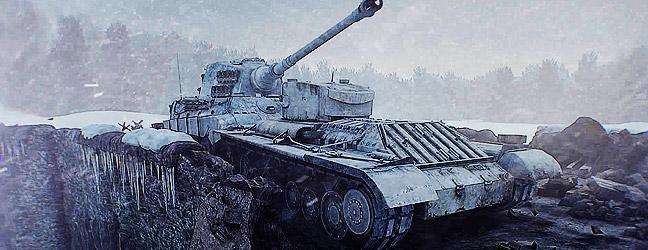
The_Chieftain:  The Panther/M10 is back in the Shop, and it's
fun tank to play. However, there are a few misconceptions going
around about the nature of the vehicle. Probably the major
misconception is the colloquial description of the vehicle as "the
Warcrimes Panther." This is understandable, given the tank is very
obviously equipped with the insignia of the Allied forces (the
white star).Its background also includes
Operation Grief ("Griffon"
The Panther/M10 is back in the Shop, and it's
fun tank to play. However, there are a few misconceptions going
around about the nature of the vehicle. Probably the major
misconception is the colloquial description of the vehicle as "the
Warcrimes Panther." This is understandable, given the tank is very
obviously equipped with the insignia of the Allied forces (the
white star).Its background also includes
Operation Grief ("Griffon" , which was to sow confusion
amongst the Americans, using Germans in US uniforms and equipment
to do so. The Germans captured as part of this operation were
executed by firing squad as spies. Unfortunately, like many claims
as to what the Laws of War allow, the aforementioned misconception
is not necessarily the case, and it can be argued that First Army
were incorrect in executing the prisoners.The operable point most
folks will look to is the Hague convention of 1907 -- specifically,
Article 23, which states that "In addition to the prohibitions
provided by special Conventions, it is especially forbidden [...]
to make improper use of a flag of truce, of the national flag or of
the military insignia and uniform of the enemy, as well as the
distinctive badges of the Geneva Convention." Well, there you go.
The Germans used the military insignia of the enemy in warfare.
Case closed.
, which was to sow confusion
amongst the Americans, using Germans in US uniforms and equipment
to do so. The Germans captured as part of this operation were
executed by firing squad as spies. Unfortunately, like many claims
as to what the Laws of War allow, the aforementioned misconception
is not necessarily the case, and it can be argued that First Army
were incorrect in executing the prisoners.The operable point most
folks will look to is the Hague convention of 1907 -- specifically,
Article 23, which states that "In addition to the prohibitions
provided by special Conventions, it is especially forbidden [...]
to make improper use of a flag of truce, of the national flag or of
the military insignia and uniform of the enemy, as well as the
distinctive badges of the Geneva Convention." Well, there you go.
The Germans used the military insignia of the enemy in warfare.
Case closed. This
misses a few fine details, though. First, the fact that it's under
a section entitled "Means of injuring the enemy, sieges, and
bombardments." Second, the use of the word "improper" in the
prohibition, suggesting there are proper uses. (A basic rule of
interpreting law is that words are not needlessly added.)So what is
an improper use of the enemy flag or insignia? Where is the line
crossed between a ruse de guerre (ruse of war) and
treachery and perfidy?The idea of "cheating" in a war is long and
storied, going back at least to the Trojan Horse. Of course, if you
want to get philosophical, why is "cheating" even considered bad?
There is no "fair play" award to the loser, for example, and when
your own existence is on the line, there is an argument for doing
whatever it takes. History has shown that as folks get desperate,
they will disregard "honorable combat" to one extent or another.
However, the rules exist, and as long as you intend to follow them,
the trick becomes figuring out which side of the line an action
falls.Perhaps you're familiar with those old pirate movies where a
ship is floating along,the crew waves at a friendly ship
approaching over the horizon, only to, at the last minute, react
with horror and dread as the approaching ship lowers the ensign she
had been flying, and replace it with the Jolly Roger. Avast! But,
hey, they're pirates. Such evil trickery is to be expected, and
that's why they're hung, right?
This
misses a few fine details, though. First, the fact that it's under
a section entitled "Means of injuring the enemy, sieges, and
bombardments." Second, the use of the word "improper" in the
prohibition, suggesting there are proper uses. (A basic rule of
interpreting law is that words are not needlessly added.)So what is
an improper use of the enemy flag or insignia? Where is the line
crossed between a ruse de guerre (ruse of war) and
treachery and perfidy?The idea of "cheating" in a war is long and
storied, going back at least to the Trojan Horse. Of course, if you
want to get philosophical, why is "cheating" even considered bad?
There is no "fair play" award to the loser, for example, and when
your own existence is on the line, there is an argument for doing
whatever it takes. History has shown that as folks get desperate,
they will disregard "honorable combat" to one extent or another.
However, the rules exist, and as long as you intend to follow them,
the trick becomes figuring out which side of the line an action
falls.Perhaps you're familiar with those old pirate movies where a
ship is floating along,the crew waves at a friendly ship
approaching over the horizon, only to, at the last minute, react
with horror and dread as the approaching ship lowers the ensign she
had been flying, and replace it with the Jolly Roger. Avast! But,
hey, they're pirates. Such evil trickery is to be expected, and
that's why they're hung, right? Well,
no, not really. Such activities were considered perfectly
legitimate for naval warfare. Sailing under the enemy's flag was
never a problem, but shooting at them was. Now, you can certainly
argue that there is little practical difference when you
have only however long it takes to run down one flag and run up
another in order to prepare yourself, and I'm not sure why this
didn't simply result everybody sailing around under everybody
else's flag by default. What makes the critical difference under
the laws of war is that as long as you're not shooting at anyone,
you're not using the enemy flag as "a means to injure the enemy" --
at least, not physically. In the movie "The Eagle has Landed," the
Germans are discovered because they were wearing their own uniforms
under the British ones in order to not be unlawful, and it's
actually an accurate depiction of the laws of war, not just a movie
thing. So if you can do that for ships, why should the principle be
any different on land? It isn't.During the postwar trial of
Skorzeny, Allied personnel testified that they wore German uniforms
as well (similar to the US Navy testifying at Doenitz's trial on
submarine warfare). Peter Caddick-Adam's book "Snow and Steel"
makes reference to Americans in Aachen leading with German
vehicles, though I've not found independent verification. As long
as the Germans did not engage the Allied forces whilst displaying
the Allied uniforms and insignia, and I have seen no evidence that
they attempted to do so, they committed no crimes. Now, quite how
they planned on removing the white stars on the Panthers before
engaging, I've no clue, but as the Skorzeny trial indicated, there
was no indication that Skorzeny ever ordered or intended for the
German forces to fire upon allied forces. Remember, it was an
operation to sow confusion, not kill people.What about those German
troops executed for being spies? Again a common perception... "If
you are wearing foreign uniform, you are a spy, exempt from the
protections of the laws of war, and can be shot." What the
tribunals seem to have omitted, however, is that one of the
requirements for being categorized as a spy is that you are
attempting to transmit information.Take the current US Manual for
Courts Martial. For one to be convicted of being a spy, it has to
be shown:That the accused was found in, about, or in and about a
certain place, vessel, or aircraft within the control or
jurisdiction of an armed force of the United States, or a shipyard,
manufacturing or industrial plant, or other place or institution
engaged in work in aid of the prosecution of the war by the United
States, or elsewhere; That the accused was lurking, acting
clandestinely or under false pretenses; That the accused was
collecting or attempting to collect certain information; That the
accused did so with the intent to convey this information to the
enemy; and That this was done in time of war.There was no
indication that there was an attempt to convey information to the
German lines, only to muddle Allied information. Thus, again, the
folks conducting Operation Grief were theoretically safe.
Of course, there's no accounting for miscarriages of justice,
especially when your side has just hammered the side doing the
judging.So that's the legality; what did they actually do?
Well,
no, not really. Such activities were considered perfectly
legitimate for naval warfare. Sailing under the enemy's flag was
never a problem, but shooting at them was. Now, you can certainly
argue that there is little practical difference when you
have only however long it takes to run down one flag and run up
another in order to prepare yourself, and I'm not sure why this
didn't simply result everybody sailing around under everybody
else's flag by default. What makes the critical difference under
the laws of war is that as long as you're not shooting at anyone,
you're not using the enemy flag as "a means to injure the enemy" --
at least, not physically. In the movie "The Eagle has Landed," the
Germans are discovered because they were wearing their own uniforms
under the British ones in order to not be unlawful, and it's
actually an accurate depiction of the laws of war, not just a movie
thing. So if you can do that for ships, why should the principle be
any different on land? It isn't.During the postwar trial of
Skorzeny, Allied personnel testified that they wore German uniforms
as well (similar to the US Navy testifying at Doenitz's trial on
submarine warfare). Peter Caddick-Adam's book "Snow and Steel"
makes reference to Americans in Aachen leading with German
vehicles, though I've not found independent verification. As long
as the Germans did not engage the Allied forces whilst displaying
the Allied uniforms and insignia, and I have seen no evidence that
they attempted to do so, they committed no crimes. Now, quite how
they planned on removing the white stars on the Panthers before
engaging, I've no clue, but as the Skorzeny trial indicated, there
was no indication that Skorzeny ever ordered or intended for the
German forces to fire upon allied forces. Remember, it was an
operation to sow confusion, not kill people.What about those German
troops executed for being spies? Again a common perception... "If
you are wearing foreign uniform, you are a spy, exempt from the
protections of the laws of war, and can be shot." What the
tribunals seem to have omitted, however, is that one of the
requirements for being categorized as a spy is that you are
attempting to transmit information.Take the current US Manual for
Courts Martial. For one to be convicted of being a spy, it has to
be shown:That the accused was found in, about, or in and about a
certain place, vessel, or aircraft within the control or
jurisdiction of an armed force of the United States, or a shipyard,
manufacturing or industrial plant, or other place or institution
engaged in work in aid of the prosecution of the war by the United
States, or elsewhere; That the accused was lurking, acting
clandestinely or under false pretenses; That the accused was
collecting or attempting to collect certain information; That the
accused did so with the intent to convey this information to the
enemy; and That this was done in time of war.There was no
indication that there was an attempt to convey information to the
German lines, only to muddle Allied information. Thus, again, the
folks conducting Operation Grief were theoretically safe.
Of course, there's no accounting for miscarriages of justice,
especially when your side has just hammered the side doing the
judging.So that's the legality; what did they actually do? First,
they decided to make their Panthers look like M10s. That in itself
is an interesting choice, because the vehicle the Americans were
most worried would be mistaken for a Panther and thus fired upon
was, in fact, the M18. The Americans focused on the large
roadwheels and muzzle brake of the M18 as key, defining
characteristics. M10s, of course, had bogies, and no muzzle brake.
Although the Panther/M10 in World of Tanks has no muzzle brake, the
photographs of the captured real-world vehicles indicate that the
Germans decided to keep theirs on.In any case, M10 it was. Probably
because of the large upper front slope, and the straight turret
edges. The vismod (visual modification) panels were a little open
at the rear, so that the loader's hatch remained
accessible.
First,
they decided to make their Panthers look like M10s. That in itself
is an interesting choice, because the vehicle the Americans were
most worried would be mistaken for a Panther and thus fired upon
was, in fact, the M18. The Americans focused on the large
roadwheels and muzzle brake of the M18 as key, defining
characteristics. M10s, of course, had bogies, and no muzzle brake.
Although the Panther/M10 in World of Tanks has no muzzle brake, the
photographs of the captured real-world vehicles indicate that the
Germans decided to keep theirs on.In any case, M10 it was. Probably
because of the large upper front slope, and the straight turret
edges. The vismod (visual modification) panels were a little open
at the rear, so that the loader's hatch remained
accessible. Up
front, the bow machinegun mount was removed, and replaced with a
simple removable panel. I haven't seen, but it would not be
unreasonable to suspect that the MG mount was taken from an early
Panther, which had the letterbox port before the MG ball mount was
developed.Finally, the cupola, which obviously no open-topped
vehicle would have, was also removed, and replaced by a simple
split-door hatch.
Up
front, the bow machinegun mount was removed, and replaced with a
simple removable panel. I haven't seen, but it would not be
unreasonable to suspect that the MG mount was taken from an early
Panther, which had the letterbox port before the MG ball mount was
developed.Finally, the cupola, which obviously no open-topped
vehicle would have, was also removed, and replaced by a simple
split-door hatch. That's
the tank! Go forth and have fun!
That's
the tank! Go forth and have fun!
The Panther/M10 is back in the Shop, and it's
fun tank to play. However, there are a few misconceptions going
around about the nature of the vehicle. Probably the major
misconception is the colloquial description of the vehicle as "the
Warcrimes Panther." This is understandable, given the tank is very
obviously equipped with the insignia of the Allied forces (the
white star).Its background also includes
Operation Grief ("Griffon", which was to sow confusion
amongst the Americans, using Germans in US uniforms and equipment
to do so. The Germans captured as part of this operation were
executed by firing squad as spies. Unfortunately, like many claims
as to what the Laws of War allow, the aforementioned misconception
is not necessarily the case, and it can be argued that First Army
were incorrect in executing the prisoners.The operable point most
folks will look to is the Hague convention of 1907 -- specifically,
Article 23, which states that "In addition to the prohibitions
provided by special Conventions, it is especially forbidden [...]
to make improper use of a flag of truce, of the national flag or of
the military insignia and uniform of the enemy, as well as the
distinctive badges of the Geneva Convention." Well, there you go.
The Germans used the military insignia of the enemy in warfare.
Case closed.This
misses a few fine details, though. First, the fact that it's under
a section entitled "Means of injuring the enemy, sieges, and
bombardments." Second, the use of the word "improper" in the
prohibition, suggesting there are proper uses. (A basic rule of
interpreting law is that words are not needlessly added.)So what is
an improper use of the enemy flag or insignia? Where is the line
crossed between a ruse de guerre (ruse of war) and
treachery and perfidy?The idea of "cheating" in a war is long and
storied, going back at least to the Trojan Horse. Of course, if you
want to get philosophical, why is "cheating" even considered bad?
There is no "fair play" award to the loser, for example, and when
your own existence is on the line, there is an argument for doing
whatever it takes. History has shown that as folks get desperate,
they will disregard "honorable combat" to one extent or another.
However, the rules exist, and as long as you intend to follow them,
the trick becomes figuring out which side of the line an action
falls.Perhaps you're familiar with those old pirate movies where a
ship is floating along,the crew waves at a friendly ship
approaching over the horizon, only to, at the last minute, react
with horror and dread as the approaching ship lowers the ensign she
had been flying, and replace it with the Jolly Roger. Avast! But,
hey, they're pirates. Such evil trickery is to be expected, and
that's why they're hung, right?Well,
no, not really. Such activities were considered perfectly
legitimate for naval warfare. Sailing under the enemy's flag was
never a problem, but shooting at them was. Now, you can certainly
argue that there is little practical difference when you
have only however long it takes to run down one flag and run up
another in order to prepare yourself, and I'm not sure why this
didn't simply result everybody sailing around under everybody
else's flag by default. What makes the critical difference under
the laws of war is that as long as you're not shooting at anyone,
you're not using the enemy flag as "a means to injure the enemy" --
at least, not physically. In the movie "The Eagle has Landed," the
Germans are discovered because they were wearing their own uniforms
under the British ones in order to not be unlawful, and it's
actually an accurate depiction of the laws of war, not just a movie
thing. So if you can do that for ships, why should the principle be
any different on land? It isn't.During the postwar trial of
Skorzeny, Allied personnel testified that they wore German uniforms
as well (similar to the US Navy testifying at Doenitz's trial on
submarine warfare). Peter Caddick-Adam's book "Snow and Steel"
makes reference to Americans in Aachen leading with German
vehicles, though I've not found independent verification. As long
as the Germans did not engage the Allied forces whilst displaying
the Allied uniforms and insignia, and I have seen no evidence that
they attempted to do so, they committed no crimes. Now, quite how
they planned on removing the white stars on the Panthers before
engaging, I've no clue, but as the Skorzeny trial indicated, there
was no indication that Skorzeny ever ordered or intended for the
German forces to fire upon allied forces. Remember, it was an
operation to sow confusion, not kill people.What about those German
troops executed for being spies? Again a common perception... "If
you are wearing foreign uniform, you are a spy, exempt from the
protections of the laws of war, and can be shot." What the
tribunals seem to have omitted, however, is that one of the
requirements for being categorized as a spy is that you are
attempting to transmit information.Take the current US Manual for
Courts Martial. For one to be convicted of being a spy, it has to
be shown:That the accused was found in, about, or in and about a
certain place, vessel, or aircraft within the control or
jurisdiction of an armed force of the United States, or a shipyard,
manufacturing or industrial plant, or other place or institution
engaged in work in aid of the prosecution of the war by the United
States, or elsewhere; That the accused was lurking, acting
clandestinely or under false pretenses; That the accused was
collecting or attempting to collect certain information; That the
accused did so with the intent to convey this information to the
enemy; and That this was done in time of war.There was no
indication that there was an attempt to convey information to the
German lines, only to muddle Allied information. Thus, again, the
folks conducting Operation Grief were theoretically safe.
Of course, there's no accounting for miscarriages of justice,
especially when your side has just hammered the side doing the
judging.So that's the legality; what did they actually do?First,
they decided to make their Panthers look like M10s. That in itself
is an interesting choice, because the vehicle the Americans were
most worried would be mistaken for a Panther and thus fired upon
was, in fact, the M18. The Americans focused on the large
roadwheels and muzzle brake of the M18 as key, defining
characteristics. M10s, of course, had bogies, and no muzzle brake.
Although the Panther/M10 in World of Tanks has no muzzle brake, the
photographs of the captured real-world vehicles indicate that the
Germans decided to keep theirs on.In any case, M10 it was. Probably
because of the large upper front slope, and the straight turret
edges. The vismod (visual modification) panels were a little open
at the rear, so that the loader's hatch remained
accessible.Up
front, the bow machinegun mount was removed, and replaced with a
simple removable panel. I haven't seen, but it would not be
unreasonable to suspect that the MG mount was taken from an early
Panther, which had the letterbox port before the MG ball mount was
developed.Finally, the cupola, which obviously no open-topped
vehicle would have, was also removed, and replaced by a simple
split-door hatch.That's
the tank! Go forth and have fun!The Chieftain's Hatch: Panther/M10 and the Laws of War