

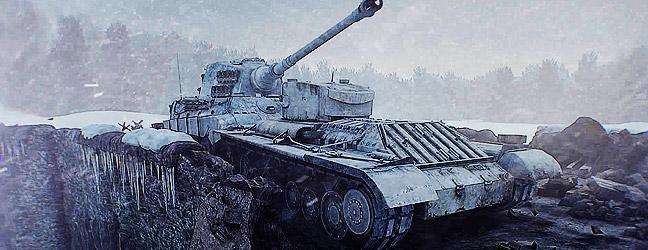






The Abrams tank.
Дата: 30.07.2014 03:00:29
 DrinaWolf, on Jul 28 2014 - 03:26, said: -The engine... hahaha, everyone loves to attack this one and I am
no different. ATG-1500 is one of very few turbine tank
engines ever attempted and is the only one still in service, for
very good reasons. Its reliability and service life are not
as long as modern diesels. As a turbine it is designed to run
on jet fuel (JP-8 these days), while it is tri-fuel capable,
running it on anything except JP-8 will cause damage and quickly
that is why the army only runs it on JP-8. Speaking of JP-8
it has no diesel fuel in it, it is just kerosine with lubricate
additives so it can be used in diesel engines (every other ground
vehicle in US inventory), and it is A LOT more flammable than
diesel. At low RPMs the ATG-1500 bleeds turboshaft oil
because as a turbine it does not seal until reaching higher
RPMs. All tanks leak oil and even fuel on occasion but the
ATG-1500 can require 10 gallons of turboshaft oil a day.
Combined with high operating temperatures this makes the ATG-1500
far more prone to fires than any diesel. Speaking of fires
the 1700 degree F exhaust makes an amazing heat signature and you
better not drive under trees in autumn and if you put exhaust
deflector on better not drive over fallen leafs
DrinaWolf, on Jul 28 2014 - 03:26, said: -The engine... hahaha, everyone loves to attack this one and I am
no different. ATG-1500 is one of very few turbine tank
engines ever attempted and is the only one still in service, for
very good reasons. Its reliability and service life are not
as long as modern diesels. As a turbine it is designed to run
on jet fuel (JP-8 these days), while it is tri-fuel capable,
running it on anything except JP-8 will cause damage and quickly
that is why the army only runs it on JP-8. Speaking of JP-8
it has no diesel fuel in it, it is just kerosine with lubricate
additives so it can be used in diesel engines (every other ground
vehicle in US inventory), and it is A LOT more flammable than
diesel. At low RPMs the ATG-1500 bleeds turboshaft oil
because as a turbine it does not seal until reaching higher
RPMs. All tanks leak oil and even fuel on occasion but the
ATG-1500 can require 10 gallons of turboshaft oil a day.
Combined with high operating temperatures this makes the ATG-1500
far more prone to fires than any diesel. Speaking of fires
the 1700 degree F exhaust makes an amazing heat signature and you
better not drive under trees in autumn and if you put exhaust
deflector on better not drive over fallen leafsThe_Chieftain: The turboshaft oil figure you refer to is definitely wrong,
I'll say that as an Abrams tanker. We always carried a couple of
tins for top-ups, but what tanker wouldn't? The 1,700F exhaust also
makes a great coffee cooker, sleeping-bag dryer, and
infantry-warmer. The heat signature isn't so much of a problem:
It's at the back of the tank, we try not to drive into battle
backwards. I've never started a fire with my exhaust, and we train
in some pretty dry grass and scrub in California.
Quote Now to fuel consumption, I will use road travel as a base. At best the ATG-1500 uses 4gpm at speeds above 30mph, at speeds below 20mph it uses 8gpm. A modern diesel like in my upgraded T-55, regardless of speed, only uses 1-2gpm, the 1500hp diesel in the Leopard 2A6 uses less than that (ah, German engines) and, to be sure, these diesels are smokeless. With a full tank of 505gallons the ATG-1500 can only idle for 10-15 hours. With 155gallons my T-55 can idle for 30 hours. The Leopard 2A6 with 320gallons can idle for 60 hours! Here is concern with idling, any other real life tanker on here will tell you a tank spends most of its time idling, maybe 70%-80% of time. The ATG-1500 can take up to 60sec to start(and 10 gallons of fuel), a diesel takes 5sec at most. So in combat environment it is not a good to turn the ATG-1500 off. This forces the M1A2 SEP to either pull back from combat, or have JP-8 tankers come very close to the front, twice a day at least.
The_Chieftain: Yes, fuel consumption is generally higher. We don't care. We
in the US military have enough tanker trucks and fuel to do
the job. I don't believe we've ever had to call off an attack
because the tanks ran out of gas, and the reason is that it
actually sucks a lot less fuel than people think. For the
record, at Tactical Idle, the Abrams sucks 17.5 gal/hour. That's
still a good 28 hours of idling on a full tank of gas, not that any
tanker would do that. (Full idle consumes less, but I don't know
what the figure is, but Wiki says 10/hour. There are 503 USG in the
fuel tanks, so 50 hours). The story of the auxilliary
power unit is a sad one. Carnage is correct that the original APU
mounted on the left rear of the hull was a bit of a disaster, and
removed. The next program was the UAAPU (Under Armor Auxilliary
Power Unit), which was a tiny little turbine. It replaced a
55gal cell, so reduced overall fuel in the tank to 448USG, while
drinking a rather unfortunate 8.5USG/hr. Then they came up
with another under-armor, based on a rotary engine. That failed to
lack of money. . Finally, an external APU was procured which sits
in the turret bustle, it's the current solution and I've not seen a
tank without one in years. It consumes 1.5gal/hour or so. So that's
about 330 hours of idling, if you have a particular need to do
that. Not that you would. -Ammunition or lack of certain
type. Its anti-tank rounds are legends and I am sure the
newer ones are even better, no problem. But to date there has
been no anti-personnel round fielded for it except canister which
has no better range than the COAX MG and is dangerous to fire past
infantry (note: I said "past" not "over", never fire main gun
rounds over friends). I personally know how important a
tank's coax is to its defense and infantry support but HE-FRAG
rounds can be just as important, they have much better range and
accuracy and cause instant area effect. They are totally
important when engaging anti-tank teams, especially ATGMs which can
be farther than the COAX or AA gun's effective range. Same
can be said against urban areas or dug-in positions. While
sabot and HEAT rounds are powerful they will not do nearly as much
damage to structures and have very little area effect. Why an
HE-FRAG has not been fielded for Abrams, especially with the nature
of conflict in Iraq 2003-2011, is very confusing to me. It
is confusing to me too, since the USMC have been fielding HE rounds
for their Abrams tanks for the last few years (DM11 Multi-purpose
high explosive). There is no mechanical reason why M1 can't fire HE
rounds. It can. The HE-Obstacle Reducing round has been in Army
service for some time, though granted, it's designed, as the name
implies, for blowing things up, not killing people. Up until now,
though, the Army has generally considered that the .50 cal and the
accompanying Bradley can deal with the softer targets. This is
changing, with the advent of the XM1147 High Explosive
Multi Purpose (AMP) round. In any case, the reason the Abrams has
not used HE-Frag in the US Army is because the US Army didn't feel
any need to buy or produce the ammunition, not because the tank was
incapable of using it. That should not be held against the tank.
The Abrams tank.